articles
How to nurture a personal library
12 passages marked
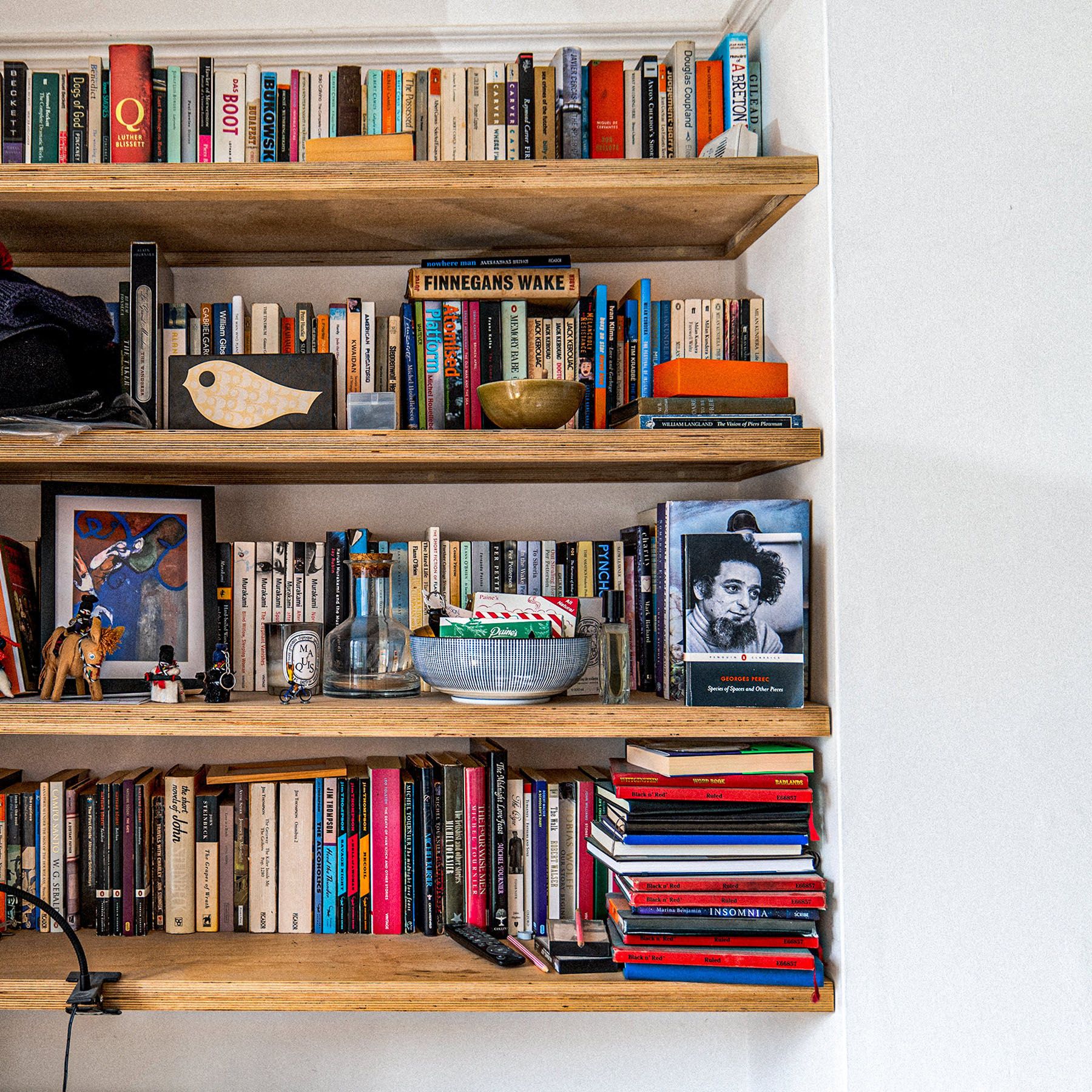
According to Cicero, if you have a library and a garden, you have everything you need.)
Thinking like a librarian is about taking a step back to consider your collection as a whole, including what you add to it and why.)
The aim is ‘not what you think your library *should* be’, she told me, ‘but the library that you are actually going to use and appreciate on a regular basis.’)
Physical books are intimate objects, and taking one off the shelf can conjure up vivid memories of the time you first read it.)
When the internet beckons with its promise that anything and everything is just a Google search away, opting to tune your attention to a single volume within a library you’ve selected for yourself can be seen as a radical act of paying attention. It’s a form of escape, too – a step out of the ceaselessly churning, self-refreshing timeline, into a space where books from different times and places press up against each other, having the most fascinating conversations, like the guests at one of those fantasy dinner parties where you can invite anyone you like, living or dead.)
In their book *The Novel Cure* (2013), the bibliotherapists Ella Berthoud and Susan Elderkin recommend dedicating a shelf to your favourite books as a way to (re)affirm your tastes, and also to give you something to reach for if you are in a reading rut and need to be reminded of how good reading can be.)
If you *only* ever pick up books you know you’ll like, however, your reading experiences might be a bit like going to the same restaurant and always ordering the same thing on the menu. Sure, it’s reliable, but you don’t know what you might be missing out on. And, through repetition, even that favourite dish might start to lose its flavour. Sometimes, the best books are the ones whose rewards you least expect; other times, you need to read a ‘bad’ book as a palate cleanser, to recalibrate and reaffirm your tastes. Embracing serendipity, then, is another important part of creating a library that delights you.)
A library should be a little bit chaotic and contradictory – after all, it will inevitably contain ideas that disagree with each other. A library of perfect harmony would be a rather boring and uninspiring place.)
**A personal library offers a variety of rewards.** It can be a store of memories, a tool for research, a source of pleasure and escape, and a reflection of your sense of self.)
‘Instagram can be a really useful tool, or even just taking a photo of the book you’ve just finished,’ Dew suggested. ‘The cover will often jolt some remembrance of what you enjoyed about it or didn’t like about it.’)
The writer and bibliophile Alberto Manguel has built a career out of his reading life, and his enviable library features in several of his books, but the slim [volume](https://yalebooks.yale.edu/book/9780300244526/packing-my-library/) *Packing My Library* (2018) is particularly poignant. It’s a meditation on the sadness of being compelled to dismantle his library as he enters a new stage in his life, accompanied by ‘digressions’ into the history of libraries.)
the philosopher Pierre Bayard’s entertaining [book](https://www.bloomsbury.com/au/how-to-talk-about-books-you-havent-read-9781596917149/) *How to Talk About Books You Haven’t Read* (2007). Behind the provocative title lies a fascinating discussion of what it actually means to have read a book, or partially read a book, or to have read *about* a book.)